2026-11-13 · Kwame Boateng
The 72-Hour UPS Transformer Rescue: What a Close Call Taught Me About Industrial Power Efficiency
A double-conversion UPS system lost a transformer 72 hours before acceptance testing. Here's how I coordinated the replacement — and what it changed about how I think about industrial UPS efficiency.
Thursday, 4:47 p.m. My phone buzzed. It was Marc, a procurement lead at a mid-sized data center contractor. He never calls at 4:47 p.m.
"Our double-conversion UPS took a hit two days ago," he said. "One of the isolation transformers failed. Final inspection is Friday morning. We have 72 hours."
I've handled 60+ rush orders in the past four years — everything from one-off replacement breakers to full substation kits. But a UPS transformer swap on a 72-hour countdown? That gets your attention.
A bit of context: I work for PowerSentinel, an industrial UPS system supplier that also supplies isolation transformers and battery backup components. Which means we get these calls regularly. Which also means I know exactly how hard it is to recover when one link in the chain fails.
Here's the thing about industrial UPS systems: the transformer inside one isn't a generic part. It's matched to the system's power rating, its harmonic profile, and — most critically — its compliance with IEC 62040. Swap in the wrong unit and the whole system fails acceptance testing. No exceptions.
Why a "small" transformer failure is anything but small
Let me back up for a second. If you're not steeped in UPS terminology, here's the short version: a three-phase UPS system distributes power across three conductors, each 120 degrees out of phase. That's different from a single-phase setup (one conductor, one neutral). The practical difference: three-phase handles heavier industrial loads — usually 10 kVA and up — and the internal transformer is larger, more specialized, and far less interchangeable.
Marc's project was a 400 kVA double-conversion system. The isolation transformer was rated for that load and configured for a specific neutral arrangement. It wasn't something you grab off a shelf.
Under IEC 62040-3, a double-conversion UPS (classified as VFI — voltage and frequency independent) has to keep output voltage and frequency constant in steady-state conditions, regardless of input fluctuations. Replace a transformer with one that has different leakage inductance or impedance, and that classification is void. The system might still power on. But it won't pass inspection without a new certification.
I asked Marc for the failed transformer's nameplate specs. He sent a photo 12 minutes later. I ran the numbers against our inventory database.
Zero exact matches.
Great.
The "almost right" option — and why it worried me
We had a 400 kVA isolation transformer in our warehouse that was close. Same voltage class, same kVA rating, similar impedance. But the neutral configuration was different: the customer needed a unit configured for a 4-wire system, and ours was set up for 3-wire.
Could it be reconfigured? Technically, yes. But that's the kind of "yes" that keeps you up at night. Reconfiguring a transformer isn't like flipping a switch. It requires mechanical adjustments, recalibration of protection settings, and — regardless of what anyone promises — a full dielectric test afterward.
I called our senior electrical engineer, Dan, at 5:30 p.m. He'd already left for the day. He picked up anyway.
"Bring me the spec sheet and the nameplate photo," he said. "Give me 30 minutes."
Twenty-eight minutes later, Dan called back. "The core is compatible. But we'll need to redo the neutral bus, retest the winding resistance, and run a full dielectric test. That's 14 hours minimum. And I need a third person in the shop — no exceptions."
So: 14 hours of shop time, plus shipping. If we started at 8 p.m. Thursday night, we'd have the unit ready by mid-morning Friday. Then we'd need air freight — 6 hours of transit plus customs clearance. Tight. But possible.
Wait — I forgot the battery backup question. Marc mentioned the PowerSentinel battery backup system he'd sourced two years earlier had also cycled strangely after the failure. A battery backup system keeps a UPS running during outages, but a failed transformer throws off the charge-discharge balance. I told him we'd address that after the transformer swap — one fire at a time. (It turned out to be a separate protocol issue, not a hardware problem. But that's another story.)
The 36-hour sprint (and the 20-minute scare)
We started at 7:45 p.m. Dan and two technicians stayed through the night. I coordinated from my desk until 1 a.m., then handed off to a colleague in our logistics team.
The reconfigured unit cleared the dielectric test at 9:12 a.m. Friday — 24 hours before Marc's deadline. We air-freighted it. The plane left at 11:40 a.m.
Then the scare: 20 minutes after wheels-up, our air freight broker called. Customs was flagging the shipment for additional documentation. Something about the transformer's classification code.
I've learned over the years not to panic during these moments. Panic burns fuel you'll need later. Instead, I called our customs agent directly, emailed the invoice and the bill of lading twice, and then — because I've been burned before — called again to confirm she'd actually received them.
She had.
Clearance resolved at 2:30 p.m. The unit landed at a local distribution hub at 4:50 p.m. We arranged a courier for 5:15 p.m.
Marc texted me at 7:30 p.m.: "Unit arrived. We're installing now."
I don't sleep well on nights like that. I checked my phone three times before midnight.
What actually changed our results
Here's the part I didn't fully appreciate until later. The success wasn't just about the people who stayed late. It was about the digital tracking system we'd implemented six months earlier — a simple automated flag that marks any order tied to an active commissioning deadline as priority level 1.
When I logged Marc's order into the system at 5:02 p.m., it automatically flagged the job, sent alerts to Dan and the shop manager, and pre-populated the shipping paperwork. The system even generated a customs pre-clearance template.
Did that save the order? No. Dan and the technicians saved it. But the system shaved off probably 3-4 hours of administrative back-and-forth. And with a 72-hour clock, 3-4 hours is the difference between "possible" and "no."
There's something satisfying about seeing the pieces click together like that. Six months of refinement — and it paid off on the night we needed it most.
The result — and the lesson I keep relearning
Marc's system passed inspection on Friday morning with 9 hours to spare. The double-conversion UPS system was recertified against IEC 62040-3. The client's internal deadline held. Marc sent a thank-you email that I've kept in my "good days" folder.
But here's what I keep thinking about. Six months before Marc called, I'd argued against implementing the automated priority flag. My reasoning: "We know which orders are urgent. We don't need a system to tell us."
I was wrong. Not because we didn't know — but because in a busy shop, "we know" only works until the next urgent call comes in. And the one after that. And the one you forget to log properly because you're running to the warehouse.
Efficiency isn't just about speed. It's about consistency — the system catching what humans miss when they're tired, or distracted, or juggling three deadlines at once.
The digital system we built didn't make us faster. It made us less likely to drop the ball. And on a 72-hour deadline, less likely is the same as saved.
If you're sourcing an industrial UPS system — or just dealing with a transformer failure inside one — here's what I'd tell you: document the specs before you call anyone. Get the nameplate photo. Know your system's IEC classification. That 10 minutes of preparation will save you hours on the other end.
And one more thing: when someone says "we can reconfigure it, but we'll need to test it first" — believe them. Test it. Every time. In my experience, the extra 14 hours is never the problem. The problem is the 14 hours you skipped.
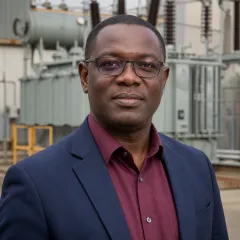
Kwame Boateng
Kwame Boateng is a transformer and power-conversion analyst specializing in distribution transformers, power supplies, inverters, and network integration. He uses IEC 60076 test data for transformer ratio, impedance, losses, and temperature rise, and IEC 62477-1 safety requirements for converter insulation and thermal boundaries while separately comparing harmonics and efficiency curves. He helps engineers and sourcing teams compare equipment against duty profiles, environmental limits, short-circuit behavior, lifecycle energy cost, and service requirements.